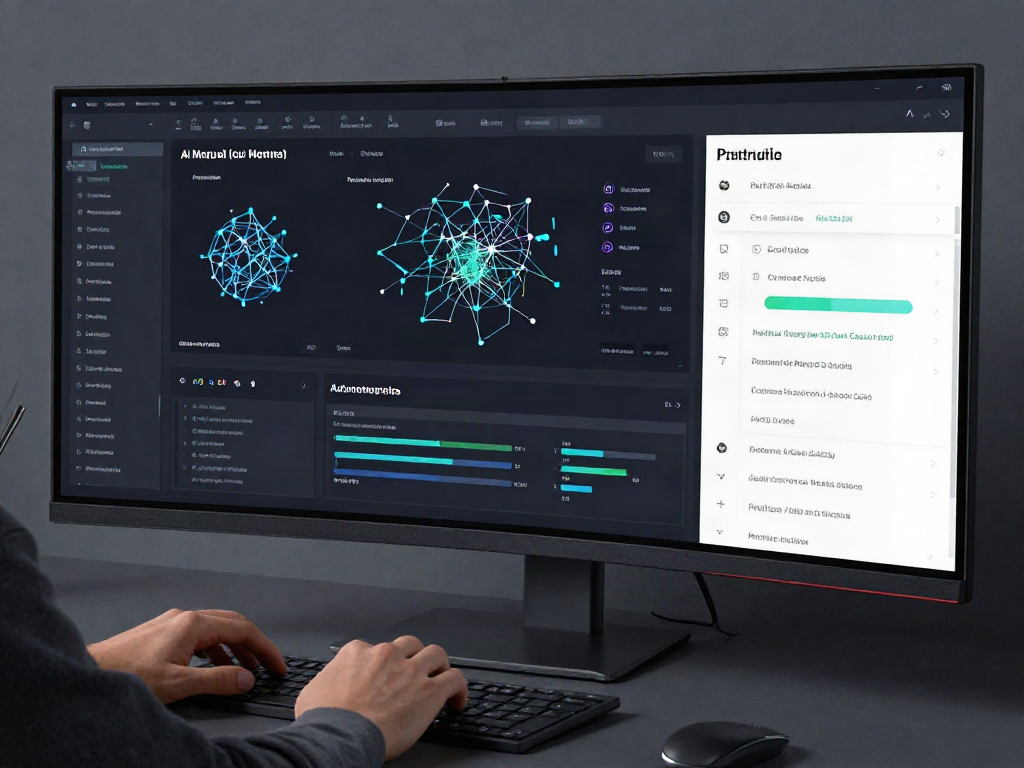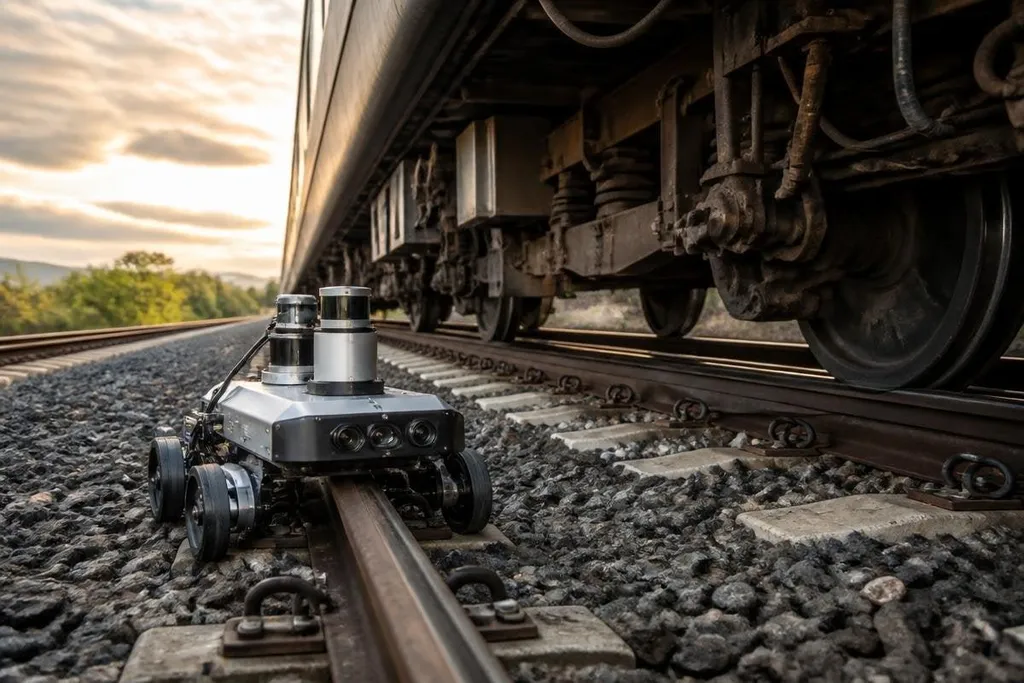
A railway robot may spot a cracked rail, a hot axle, or damage under a train before that fault reaches passengers. The hard part is proving that its camera, thermal sensor, or LiDAR reading is correct in rain, darkness, dust, and traffic.
Quick read
- Track robots can inspect places that are slow or risky for people to reach.
- Sensors may find heat, cracks, loose parts, or changes in track shape.
- A railway still needs trained staff to check alerts and decide what happens next.
Where railway robots can help
Railway work covers long tracks, bridges, tunnels, stations, and moving trains. An inspection robot could travel along a track, ride on a maintenance vehicle, or sit on a train and check equipment as the train moves.
The robot would collect images and measurements instead of relying on one visual check. A camera can record surface damage. A thermal sensor can show unusual heat around brakes, bearings, or electrical parts. LiDAR measures distance with laser pulses, which can help map track edges, tunnel walls, or objects near the line.
That information matters because a small change can grow into a service failure. A crack may widen. A hot bearing may damage nearby parts. An object near the rail may become a collision risk. The robot doesn't fix those faults by itself, but it can give maintenance staff a clearer place to start.
The safety case needs more than a good video
A test video can show a robot finding a problem. It can't show how often the robot misses one, how many false alerts it sends, or how the system behaves after weeks beside a live railway.
Rail operators would need records from repeated inspections. Those records should show the fault type, the sensor used, the weather, the train speed, and the result of a human check. Without that detail, a high alert count may mean the robot sees too much noise, while a low alert count may mean it misses damage.
Those records let railway staff compare a robot’s alert with the fault found on the train. Reports on railway robots at Robot24.com can show the inspection task, route conditions, sensor used, and staff response, so you can judge whether the alert supports a repair decision. The report should leave enough detail for an operator to check the finding before work starts.
The operator also needs a clear handoff. The robot should mark the location, attach the image or measurement, and show why it raised the alert. A technician then checks the site and records the decision. That chain makes the robot part of a safety process rather than a replacement for one.
The limits are physical
Railway robots face problems that a clean test room hides. Rain can cover a lens. Snow can change the shape of the ground. Oil and dust can block a sensor. Vibration can blur images, while poor network coverage can delay an alert.
The robot also needs a safe way to move. A track vehicle must stop clear of trains, follow railway rules, and return when its battery runs low. An inspection system fixed to a train needs to work at different speeds and keep its measurements tied to the correct place.
Power is another limit. A robot that needs frequent charging may add work for the same staff it was meant to help.
A small robot with a long battery run may be more useful than a larger machine that needs a team to move it between sites, but that depends on the task and the railway layout.
I'd wait for missed-fault records before calling any railway robot a safety upgrade. Finding ten visible defects is useful; showing how many serious defects it finds and misses is the evidence that matters.
A practical check before a railway adopts one
Before a trial becomes a purchase, the railway team can ask for these details:
- Inspection target: name the part, fault, and location the robot must check.
- Sensor record: list the camera, thermal sensor, LiDAR, or other sensor used.
- Missed faults: report defects found by staff that the robot did not flag.
- False alerts: count alerts that a technician checked and rejected.
- Human handoff: show who reviews each alert and where the decision is stored.
- Failure plan: state what happens when power, network service, or a sensor fails.
Those answers turn a demonstration into a test that a railway can audit. Until operators publish that record, railway robots remain a useful inspection idea with a safety case still being built.